Shakespeare’s Sonnets: Desire, Disgust, and the Dark Lady
The dark lady sequence: lust, self-deception, and the anti-blazon
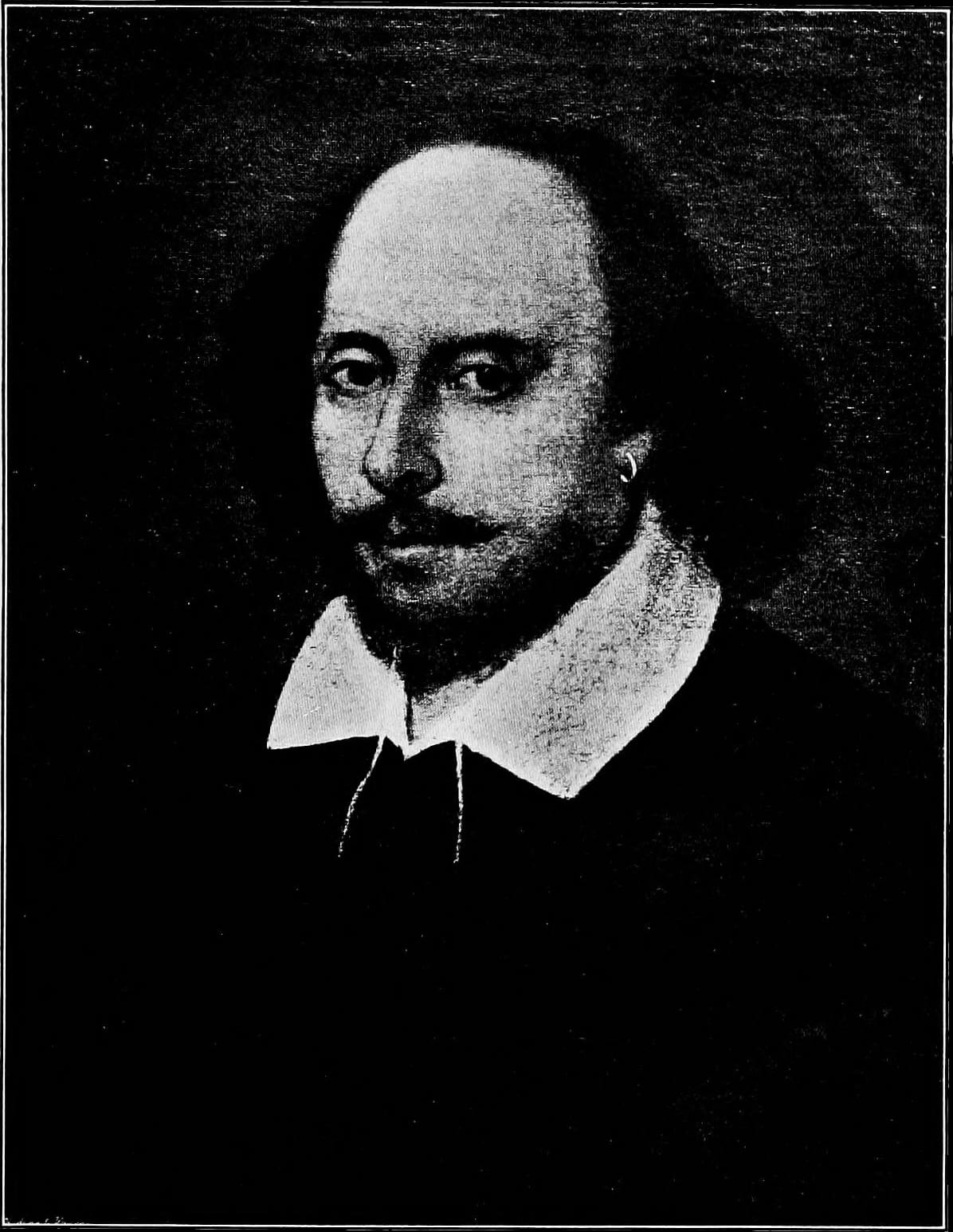
- Author / Source
- William Shakespeare (1564–1616)
- Period
- Elizabethan/Jacobean England; Sonnets published 1609
- Form & Meter
- Shakespearean sonnet sequence; anti-blazon, epigram, and pun
- Core Conflict
- Can desire be separated from disgust, and can the speaker’s self-deception be distinguished from love?
I. The Executive Dispatch (TL;DR)
- The Dark Lady sequence reverses the Fair Youth sequence’s idealising mode. Black becomes beautiful, the blazon is mocked, and desire is exposed as fever, appetite, and self-deception.
- Sonnet 129 is the sequence’s most brutal poem. It anatomises lust from anticipation to disgust, and its final couplet admits that knowledge does not produce cure.
- Sonnet 130 is not anti-love. It rejects false comparisons, but it still insists that the beloved is “as rare” as any woman falsely praised.
- The ‘Will’ sonnets make desire a matter of language. The puns on name, will, and sexuality show how thoroughly desire is entangled with words.
- The one-line exam takeaway: the Dark Lady sequence is less a love story than an investigation of desire’s capacity to falsify both the beloved and the self.
II. Historical & Intellectual Context (“The Backstory”)
The Dark Lady
Sonnets 127–152 address a woman who is dark-haired, dark-eyed, and sexually involved with the speaker. She is often called the “Dark Lady,” a name that may refer to her colouring, her moral darkness, or both. Her identity is unknown. Candidates have included Mary Fitton, Emilia Lanier, and a woman of African descent, but the evidence is speculative.
The sequence is not a stable narrative. The speaker loves, desires, betrays, and is betrayed; he praises and reviles the same woman. The poems are experiments in tone: some are comic, some obscene, some bitter, some allegorical.
Anti-Petrarchan convention
The Petrarchan tradition idealised the beloved with comparisons to sun, coral, snow, roses, and perfume. Shakespeare’s Dark Lady sonnets invert this convention. Sonnet 130 famously begins, “My mistress’ eyes are nothing like the sun,” and proceeds to deny every standard comparison.
The anti-blazon was already a recognised game in the period. Shakespeare’s version is distinctive because it combines mockery with a genuine claim of love. The poem refuses false praise, but it does not refuse desire.
Desire, disgust, and the body
The Dark Lady sequence is preoccupied with the body: lips, eyes, breasts, hair, breath, and sexual act. It is also preoccupied with disgust. Sonnet 129 describes lust as a cycle of pursuit and revulsion; Sonnet 147 compares love to a fever. The sequence asks whether sexual desire can be separated from self-loathing.
III. Structural & Formal Architecture
The anti-blazon
Sonnet 130 is built as a negative blazon: each line denies a conventional comparison. The form is a list, but the list is also an argument. By refusing to idealise, the speaker claims to love the woman as she is.
The anatomy of lust
Sonnet 129 is structured as a definition and a timeline: lust before, during, and after the act. The poem’s syntax is rapid and accumulative, matching the compulsion it describes.
Puns and repetition
The ‘Will’ sonnets (135–136) use repetition and wordplay to create a comedy of desire. The puns multiply the meanings of “will,” making the poem both funny and claustrophobic.
IV. The Chronicle: Sonnet-by-Sonnet
Sonnet 127 — “In the old age black was not counted fair”
The Argument. The speaker says that black was once not considered beautiful, but now black is “beauty’s successive heir.” The mistress’s eyes are raven black, and her mourning looks becoming. Every tongue says beauty should look so.
Key Evidence. “In the old age black was not counted fair, / Or if it were, it bore not beauty’s name” (127.1–2). “Therefore my mistress’ eyes are raven black” (127.9).
The Subtext. The poem makes black beauty a challenge to convention. It also associates the mistress’s beauty with mourning and false esteem.
Sonnet 128 — “How oft when thou, my music, music play’st”
The Argument. The speaker watches the mistress play the virginal. He envies the “jacks” that leap to kiss her hand, while his own lips must stand blushing by. He asks for her fingers for the keys and her lips for him.
Key Evidence. “How oft when thou, my music, music play’st, / Upon that blessed wood whose motion sounds” (128.1–2). “Give them thy fingers, me thy lips to kiss” (128.14).
The Subtext. The poem turns musical performance into erotic rivalry. The instrument becomes a rival body, and the speaker’s desire is both playful and possessive.
Sonnet 129 — “The expense of spirit in a waste of shame”
The Argument. The speaker defines lust as an expense of spirit and a waste of shame. Before the act, lust is murderous and full of blame; after it, it is despised. The world knows this, yet no one knows how to avoid it.
Key Evidence. “The expense of spirit in a waste of shame / Is lust in action” (129.1–2). “All this the world well knows; yet none knows well / To shun the heaven that leads men to this hell” (129.13–14).
The Subtext. The poem is a paradox: lust is both heaven and hell, pursuit and punishment. Its final couplet admits that knowledge is not cure.
Sonnet 130 — “My mistress’ eyes are nothing like the sun”
The Argument. The speaker denies every conventional comparison: coral is redder than her lips, snow is whiter than her breasts, roses are not in her cheeks, and her breath is not perfume. Yet he thinks his love as rare as any woman falsely praised.
Key Evidence. “My mistress’ eyes are nothing like the sun; / Coral is far more red, than her lips red” (130.1–2). “And yet by heaven, I think my love as rare, / As any she belied with false compare” (130.13–14).
The Subtext. The poem is anti-blazon, not anti-love. It rejects the rhetoric of idealisation while making a new claim for the beloved’s value.
Sonnet 135 — “Whoever hath her wish, thou hast thy ‘Will’”
The Argument. The speaker puns on “Will” as his name, desire, and sexual will. He asks the mistress to accept his will along with all the others. The sea receives rain and still grows; she should add his will to her abundance.
Key Evidence. “Whoever hath her wish, thou hast thy ‘Will,’ / And ‘Will’ to boot, and ‘Will’ in over-plus” (135.1–2). “Think all but one, and me in that one ‘Will’” (135.14).
The Subtext. The poem is a comic performance of sexual demande. The puns make desire both literal and linguistic.
Sonnet 136 — “If thy soul check thee that I come so near”
The Argument. The speaker tells the mistress to swear to her soul that he is her “Will.” Since “will” is admitted there, she should fulfill his love-suit. He asks to be counted as one among many, or as nothing, as long as she loves his name.
Key Evidence. “If thy soul check thee that I come so near, / Swear to thy blind soul that I was thy ‘Will’” (136.1–2). “Make but my name thy love, and love that still, / And then thou lov’st me for my name is ‘Will’” (136.13–14).
The Subtext. The poem turns identity into a pun. The speaker’s name becomes both his self and his desire, and love becomes a matter of accepting a word.
Sonnet 138 — “When my love swears that she is made of truth”
The Argument. The speaker believes his mistress even though he knows she lies, because he wants her to think him young and naive. She knows he is old; he knows she lies. Both suppress the truth, and their love is sustained by flattery.
Key Evidence. “When my love swears that she is made of truth, / I do believe her though I know she lies” (138.1–2). “Therefore I lie with her, and she with me, / And in our faults by lies we flatter’d be” (138.13–14).
The Subtext. The sonnet makes self-deception mutual. The pun on “lie” (to speak falsely and to sleep with) turns the poem’s ethical problem into a sexual joke.
Sonnet 143 — “Lo, as a careful housewife runs to catch”
The Argument. The speaker compares the mistress to a housewife who abandons her crying baby to chase a runaway chicken. He is the baby, chasing her while she pursues something else. If she catches her “Will,” he asks her to turn back and kiss him.
Key Evidence. “Lo, as a careful housewife runs to catch / One of her feather’d creatures broke away” (143.1–2). “So will I pray that thou mayst have thy ‘Will,’ / If thou turn back and my loud crying still” (143.13–14).
The Subtext. The simile is comic and humiliating. The speaker casts himself as an infant, dependent on a woman who is pursuing someone else.
Sonnet 144 — “Two loves I have of comfort and despair”
The Argument. The speaker has two loves: a “better angel” who is a fair man and a “worser spirit” who is a dark woman. The woman tempts the man away, and the speaker fears that his good angel may become a fiend.
Key Evidence. “Two loves I have of comfort and despair, / Which like two spirits do suggest me still” (144.1–2). “The better angel is a man right fair, / The worser spirit a woman colour’d ill” (144.3–4).
The Subtext. The sonnet clarifies the sequence’s two loves as a moral allegory. The speaker’s jealousy is both sexual and spiritual.
Sonnet 146 — “Poor soul, the centre of my sinful earth”
The Argument. The speaker addresses his soul, asking why it spends so much on the body’s outward display when the body is destined for worms. The soul should live on the body’s loss and buy “terms divine” by selling hours of dross.
Key Evidence. “Poor soul, the centre of my sinful earth, / My sinful earth these rebel powers array” (146.1–2). “So shalt thou feed on Death, that feeds on men, / And Death once dead, there’s no more dying then” (146.13–14).
The Subtext. The poem is a Christian meditation on mortality and the soul’s priority. It turns the sequence’s sexual obsession into a dialogue between body and soul.
Sonnet 147 — “My love is as a fever longing still”
The Argument. The speaker’s love is a fever that feeds on what preserves the disease. Reason, the physician, has left him because he will not follow its prescriptions. He is “past cure” and “frantic-mad,” swearing that the mistress is fair though she is “as black as hell.”
Key Evidence. “My love is as a fever longing still, / For that which longer nurseth the disease” (147.1–2). “For I have sworn thee fair, and thought thee bright, / Who art as black as hell, as dark as night” (147.13–14).
The Subtext. The poem turns desire into pathology. The speaker knows his love is destructive, but knowledge does not free him.
Sonnet 153 — “Cupid laid by his brand and fell asleep”
The Argument. Cupid falls asleep and a nymph steals his brand, quenching it in a cold fountain. The water becomes a healing bath. The speaker, sick with love, goes to the bath but finds no cure; the only cure lies in the mistress’s eyes.
Key Evidence. “Cupid laid by his brand and fell asleep: / A maid of Dian’s this advantage found” (153.1–2). “But found no cure, the bath for my help lies / Where Cupid got new fire; my mistress’ eyes” (153.13–14).
The Subtext. The poem is an allegory of desire and its remedies. The bath can cool ordinary love, but the mistress’s eyes reignite it.
Sonnet 154 — “The little Love-god lying once asleep”
The Argument. The same story is retold: Cupid sleeps, a nymph steals his brand, and the brand quenches in a well, making a healing bath. The speaker comes for cure but proves that “Love’s fire heats water, water cools not love.”
Key Evidence. “The little Love-god lying once asleep, / Laid by his side his heart-inflaming brand” (154.1–2). “Love’s fire heats water, water cools not love” (154.14).
The Subtext. The final sonnet ends with a paradox: the cure for love is impossible. The sequence closes on desire’s resistance to remedy.
V. The Editorial Board: Deep Thematic & Critical Analysis
Anti-Petrarchan beauty. The Dark Lady sequence rejects the idealising blazon but does not reject beauty. It relocates beauty in blackness, strangeness, and sexual power. The result is a beauty that is inseparable from danger.
Lust and disgust. Sonnet 129 is the sequence’s clearest statement of desire’s cycle. Lust is defined by anticipation and revulsion; the poem’s disgust is directed at the act and at the self. The sequence asks whether sexual desire can ever be fully integrated into love.
Self-deception. Sonnet 138 makes lying mutual and loving. The speaker knows the mistress lies, and she knows he knows; their relationship depends on the shared pretence. The poem is comic, but it is also a serious meditation on the fictions that sustain intimacy.
Puns and desire. The ‘Will’ sonnets show how completely desire is mediated by language. The puns are not just jokes; they reveal that the speaker’s identity, desire, and sexual agency are all bound up with a word.
Soul and body. Sonnet 146 interrupts the sequence’s sexual obsession with a religious meditation. The soul’s address to the body reframes desire as a problem of mortality. The sequence ends with Cupid, but it has already imagined death.
Race and colour. The Dark Lady’s darkness has been read as a marker of race, moral stigma, or aesthetic deviation. The sequence’s language is not neutral; it associates blackness with both beauty and danger. A careful reading avoids both ignoring the racial imagery and reducing the poems to it.
VI. Exam & Essay Sparkplugs
1. “Sonnet 130 is a love poem that refuses to be a love poem.” Discuss.
Winning Thesis Blueprint. Sonnet 130 rejects the false comparisons of the Petrarchan blazon while still asserting the beloved’s rarity. Its anti-idealisation is a new kind of idealisation, and its love is expressed through refusal.
Supporting points.
- The negative blazon of the first twelve lines.
- The turn in the final couplet.
- The difference between false comparison and genuine value.
2. “Sonnet 129 is more about the self than about sex.” How far do you agree?
Winning Thesis Blueprint. Sonnet 129 anatomises lust, but its real subject is the speaker’s self-division: desire, action, and disgust. The poem’s disgust is directed at the self that wants what it despises.
Supporting points.
- The timeline of before, during, and after.
- The language of waste and expense.
- The final couplet’s admission that knowledge is not cure.
3. “The Dark Lady sequence is a comedy of self-deception.” Examine.
Winning Thesis Blueprint. Sonnets 135–138 use puns, repetition, and mutual lying to make desire a comic performance. The comedy does not cancel the pain; it exposes the fictions that make desire bearable.
Supporting points.
- The ‘Will’ puns.
- The mutual deception of Sonnet 138.
- The self-mockery of Sonnet 143.